
Commercial Construction Financing — Capital Structured for Development
Strategic construction and development financing for commercial projects $2M+ across Canada — from ground-up builds to major redevelopments.
Commercial Construction Financing in Canada
Commercial construction financing provides the capital necessary to build, develop, or substantially renovate income-producing real estate. Unlike stabilized property mortgages, construction loans are structured as progressive draw facilities—funds disbursed incrementally as work completes—with specialized underwriting focused on project execution risk rather than existing cash flow.
In Canada, commercial construction financing serves a diverse range of projects: ground-up office buildings, industrial warehouses, multi-unit residential developments, mixed-use properties, retail centers, and major renovation or conversion projects. Each project type carries distinct underwriting considerations, and lender appetite varies significantly based on asset class, market conditions, and borrower experience.
Construction financing differs fundamentally from permanent mortgages. Where stabilized loans rely on existing net operating income (NOI) to support debt service, construction loans are underwritten on projected completion value, cost-to-complete analysis, and the borrower's ability to execute the development plan. Lenders evaluate feasibility studies, detailed budgets, construction timelines, general contractor qualifications, and—for income properties—pre-leasing or pre-sale commitments.
This financing is appropriate for developers, investors, and owner-occupied businesses executing significant real estate projects. Whether you're an experienced developer with multiple completions or an investor undertaking your first ground-up build, understanding construction financing mechanics is essential to structuring projects successfully and securing competitive terms.
Types of Commercial Construction Projects
We structure construction financing for a wide range of commercial and multi-unit residential developments across Canada.
How Commercial Construction Financing Works
From initial feasibility through take-out financing, construction lending follows a structured process designed to manage execution risk.
Project Feasibility & Budget Review
Comprehensive analysis of project economics, budget validation, and preliminary lender positioning. Includes review of land value, hard costs, soft costs, and contingency allocation.
Lender Structuring & Term Sheet
Strategic lender selection based on project type, location, and borrower profile. Term sheet negotiation covering LTC, interest rate, term, and draw structure.
Appraisal, Plans & Cost Review
As-is and as-complete appraisals, architectural plan review, and detailed cost report analysis. Quantity surveyor engagement for institutional lenders.
Construction Draws & Inspections
Ongoing draw administration with progress inspections. Monthly or milestone-based disbursements tied to verified completion percentages.
Take-Out or Permanent Financing
Transition from construction loan to permanent mortgage upon stabilization. Bridge-to-permanent strategies for optimized capital structure.
Key Underwriting Factors for Construction Loans
Lenders evaluate construction loans through a distinct lens focused on project execution, cost management, and exit strategy.
Loan-to-Cost (LTC)
The ratio of total loan amount to total project cost. Most construction lenders offer 65–80% LTC, meaning borrowers contribute 20–35% equity. Higher LTC available for experienced sponsors with strong pre-leasing.
Loan-to-Value (LTV)
Compares loan amount to the as-complete appraised value. Lenders use LTV to ensure the finished project supports the debt. Typical as-complete LTV ranges from 70–80%.
Cost-to-Complete
Analysis of remaining construction costs throughout the project. Lenders monitor cost-to-complete against remaining loan availability to ensure adequate funding through completion.
Developer Experience
Track record of successful project completions. Institutional lenders require demonstrated experience with similar project types and sizes. First-time developers may need additional equity or guarantees.
Pre-Leasing / Pre-Sales
Committed tenants or unit purchasers reduce execution risk. Many lenders require minimum pre-leasing thresholds (40–60%) before funding or for favorable terms.
Exit Strategy
Clear path to permanent financing or sale upon completion. Lenders evaluate take-out financing feasibility, market conditions, and refinancing or disposition timelines.
Draw Structures & Funding Mechanics
Construction loans operate as draw facilities—funds disbursed progressively based on verified construction progress. Understanding draw mechanics is essential for managing cash flow throughout your project.
Draw Schedule Structure
Funds disbursed based on completed work, typically monthly or at project milestones. Each draw requires progress inspection and cost consultant certification.
Holdbacks & Retainage
Lenders retain 10% of each draw until substantial completion. Protects against construction liens and ensures contractor performance through project end.
Interest-Only Payments
During construction, interest accrues only on funds drawn. Interest may be capitalized into the loan or paid monthly from borrower operating accounts.
Contingency Reserves
5–10% of hard costs held in reserve for cost overruns. Contingency release requires lender approval and demonstration of sufficient funds to complete.

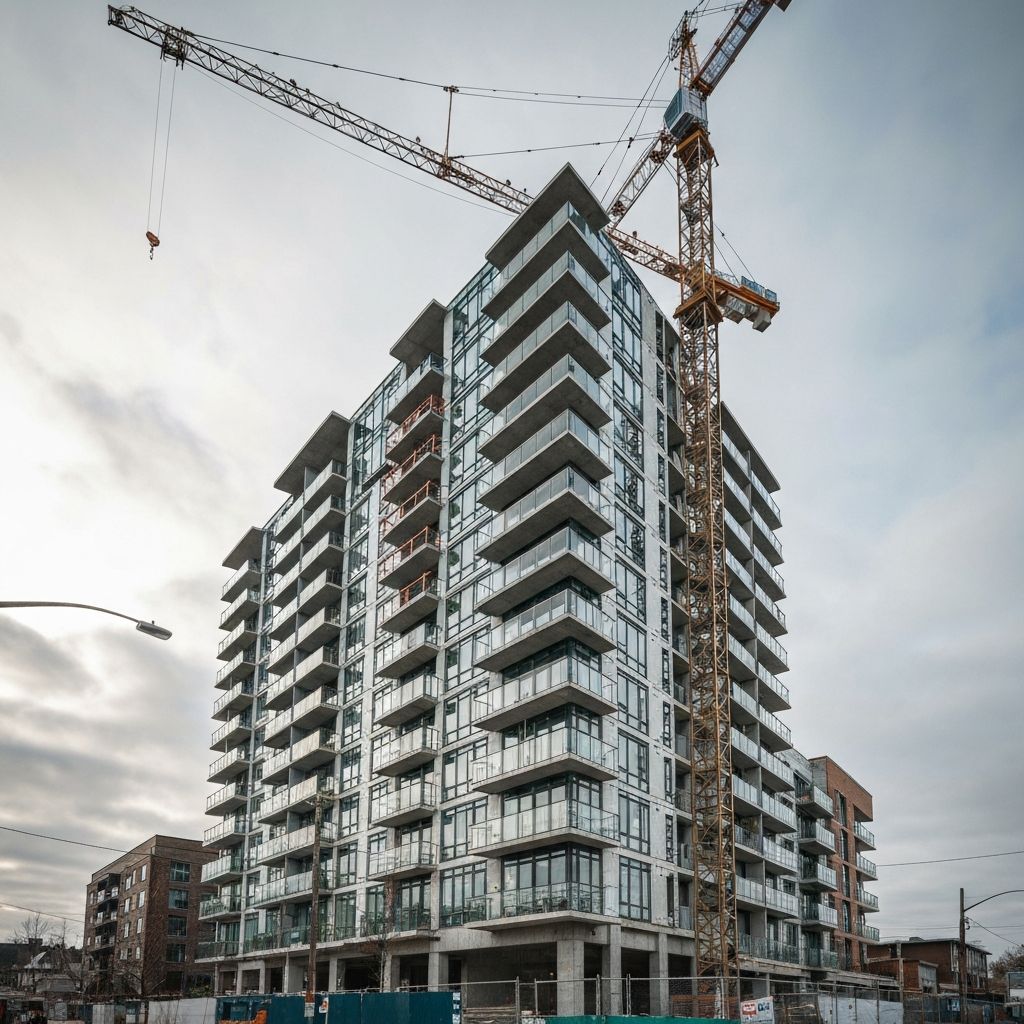
Strategic draw management ensures adequate funding through completion
CMHC & Multi-Unit Construction Financing
For purpose-built rental construction with 5+ units, CMHC-insured financing provides exceptional leverage and terms through programs like MLI Select.
Up to 95%
Loan-to-Cost
For qualified projects
50 Years
Amortization
Maximum term available
Up to 95bps
Premium Discount
With MLI Select points
Construction Financing Strategies
Different project types and borrower profiles require distinct financing approaches. We structure each project with the appropriate lender tier.
Conventional Construction
Institutional & Schedule A Banks
- 65–75% LTC typical
- Requires strong pre-leasing
- Experienced sponsors preferred
- Competitive pricing for qualified projects
- Stringent documentation requirements
Alternative Construction
Private & Non-Bank Lenders
- Up to 80% LTC available
- Flexible pre-leasing requirements
- First-time developer programs
- Faster approval timelines
- Higher interest rates offset by flexibility
CMHC Construction
Multi-Unit Residential (5+ Units)
- Up to 95% LTC for qualified projects
- 40–50 year amortization
- MLI Select premium discounts
- Requires affordability/accessibility criteria
- Longer approval process
Transition to Take-Out Financing
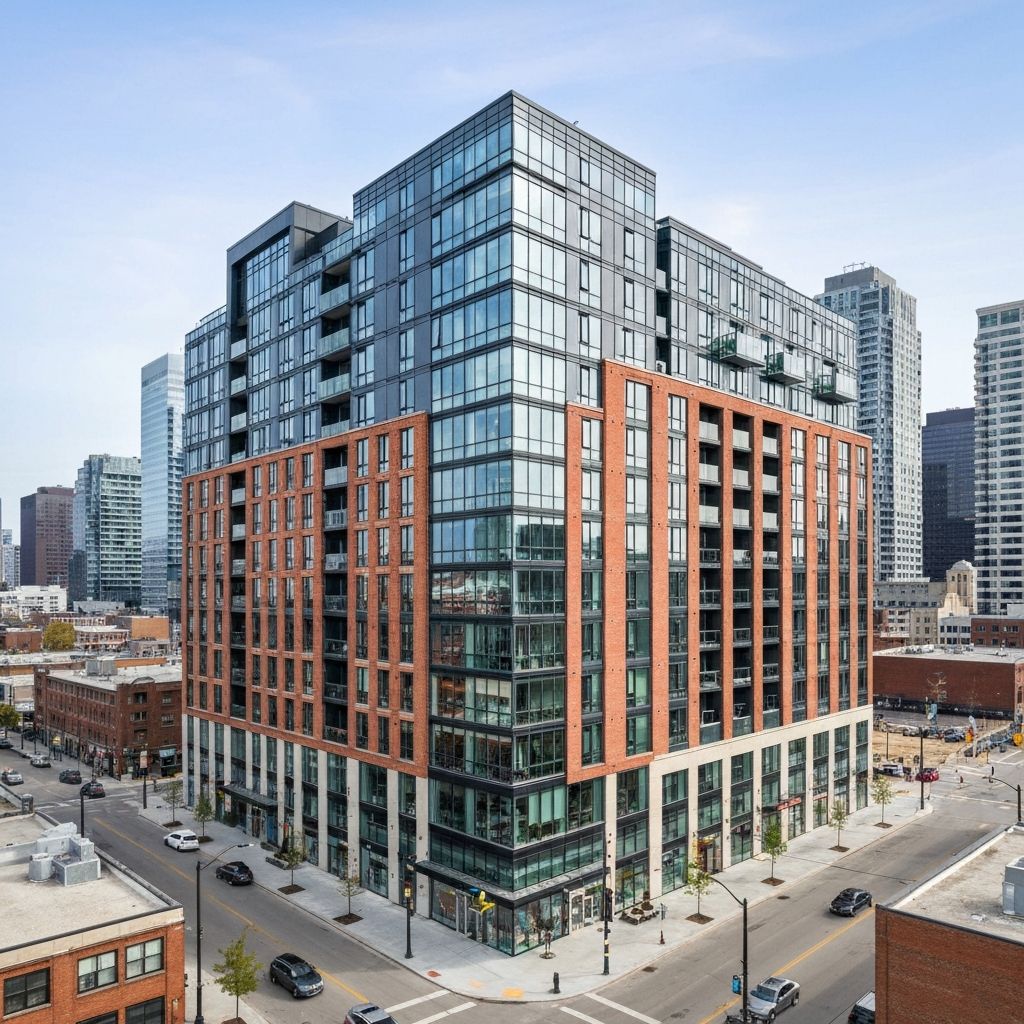
Construction loans are inherently short-term—designed to fund the build phase before converting to permanent financing upon stabilization. Planning the take-out strategy from project inception ensures smooth transitions and optimal long-term capital structure.
Why Use a Commercial Mortgage Agent for Construction
Construction financing requires specialized expertise beyond standard commercial lending. Agent-led structuring provides meaningful advantages.
| Consideration | Direct Lender | Broker-Led |
|---|---|---|
| Lender Options | Single institution | Multiple lender tiers |
| Construction Expertise | Varies by lender | Specialized structuring |
| Draw Administration | Lender-managed only | Oversight & advocacy |
| Term Negotiation | Standard terms | Competitive positioning |
| Take-Out Planning | Often separate process | Integrated strategy |
| Problem Resolution | Lender discretion | Borrower representation |
Development Scenarios
Anonymized examples illustrating construction financing structures for different project types and borrower situations.
Urban Mixed-Use Development
6-storey mixed-use: retail + 48 rental units
Challenge
First-time developer with strong financial backing but no construction track record. Required creative lender positioning.
Approach
Structured with alternative lender at 75% LTC with additional equity reserve. Strong GC with bonding and experienced project manager satisfied lender requirements.
Industrial Warehouse Build
120,000 SF distribution facility
Challenge
Speculative build with no pre-leasing in competitive industrial market. Required lender comfortable with lease-up risk.
Approach
Institutional lender provided construction facility with 12-month lease-up extension. Borrower's 35% equity and strong industrial track record supported approval.
Multi-Unit Rental Construction
Purpose-built rental: 72 units
Challenge
Borrower sought maximum leverage with CMHC benefits. Project required MLI Select qualification for optimal terms.
Approach
Structured for CMHC MLI Select with 10% affordability commitment. Achieved 50-year amortization and significant premium discount through energy efficiency measures.
Frequently Asked Questions
Common questions about commercial construction financing in Canada.
Structure Your Commercial Development with Clarity
From project feasibility through take-out financing, we provide strategic construction financing guidance for developers and investors executing $2M+ commercial projects across Canada.
Information is for general purposes only and does not constitute financial advice. Construction financing is subject to lender approval, project feasibility assessment, and borrower qualification. Terms, rates, and availability vary by project type, location, and market conditions.